Categories
Gentlemanly Figureheads

4 Role Models for Young Gentlemen

Afternoon gents, it’s Max from The Young Gentleman’s Guide here! So today, I’m going to get a bit more broad and general than most of my other articles, because today I’m going to talk about four (4) gentlemen who I believe are the best role models for any young gentlemen to look up to. These can be celebrities, historical figures, other online creators like myself, or anything in between. I thought this would be a fun list to make because these are, more or less, the gentlemen who have inspired me the most, and I thought they would help inspire you young gents reading this. So without any further ado, let’s get started!

1. Brett McKay
IMG_1102.PNG

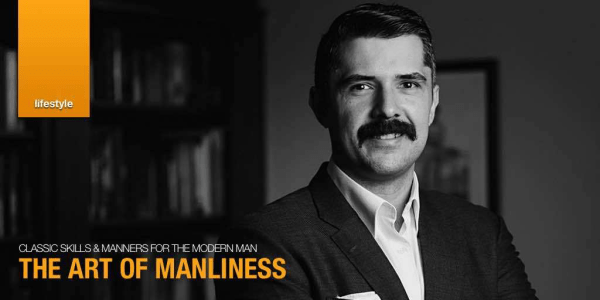
This man is actually the reason I’m even writing this blog at all! Brett McKay is the founder and editor-in-chief of the Art of Manliness, the largest independent men’s lifestyle magazine on the web. He was the first to truly introduce me to the men’s lifestyle that I write about today thanks to the book my godmother got me when I was in high school that was actually a giant compilation of a bunch of his articles. In any case, this guy has a lot of stuff to say about being a gentleman, from fashion to etiquette and beyond. He has the answer to pretty much any question that a young gentleman may have, so please be sure to check him out!

2. Theodore Roosevelt

Featured Image -- 2010

Our nation’s 26th president of course had to be on the list! I actually wrote an article that goes into much more depth about Teddy over on the Classy Libertarian, so be sure to check it out right here if you’re interested. But in short, if you had to tell me who the personification of the word “masculine” would be, I would probably say Teddy Roosevelt. Not only was he a very friendly and charismatic leader and politician, but he was also a hunter, an outdoorsman, an explorer, a mountain climber, a boxer, and a naturalist. It’s mostly thanks to him that we have the National Parks that we all know and love today. He’s a part of Mt. Rushmore for a very good reason.

3. Chris Pratt

1810700 _CA_sneaks_chris_pratt_RRD_

As weird as it might be to see a Hollywood celebrity on this list, Chris Pratt is somewhat of an oddball in Hollywood. He is definitely more right-leaning than a lot of other Hollywood actors are, and while I’m not here to tell you which way to lean politically, it’s certainly refreshing to see in a world as largely left-leaning as Hollywood. He is also openly religious, making it a point to say that God is real during his acceptance speech at the MTV music awards. Even after the recent controversy surrounding his faith arose a couple weeks ago, Pratt still stood his ground and continued to stand up for what he believes in. On top of this, those who follow him on social media know that he is a real family man. Even after he and his wife Anna Faris split up, he still does whatever is necessary to provide for himself, his son, and his now fiance, Katherine Schwarzenegger. Such things involve hunting and farming (yes, this guy is a farmer). In short, Chris Pratt is a very reverent family man who stands up for himself and his beliefs, is an avid hunter, and a working farmer to help provide for his family. If that isn’t an admirable role model for young gentlemen today, I don’t know what is.

4. Glenn Miller
Glenn Miller Post

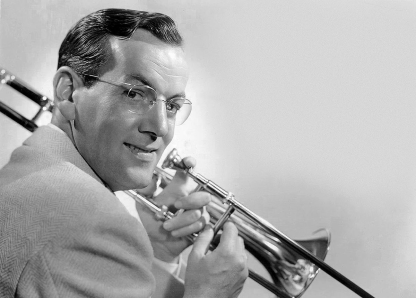
This is another guy whom I’ve written an article about before, which you can check out right here if you want some more details. In short, this bandleader was, another personification of what a true gentleman should be. Coming from rather humble beginnings, he had a vision of creating his own musical sound, and stopped at nothing in order to find it. After becoming a hit, he didn’t simply use his music as a means of making money, though he did certainly make money from his music. More importantly, he used his music as a way to help people, particularly the Allies fighting as World War II. After being drafted into the war effort, Miller started using his music as a way to build morale for the allies on the battlefield. He used it as a way to keep their spirits up when morale was at an all-time low, something that would be extremely important back when the average soldier was the American everyman. That’s what made Miller such an admirable gentleman. He used his art as a way to help the little guy and remind him of home, he didn’t just do it as a way to achieve money or fame.

So there it is! Four (4) gentlemen who I believe are the best role models for young gentlemen to look up to. I’m more than positive that there are much more gents like this out there, so if you’d like to see some more lists like this, please let me know, this was a fun list to make! In any case, I hope you enjoyed reading today’s article. Please be sure to share the article, follow the blog, follow The Young Gentleman’s Guide on FacebookTwitter, and Instagram, and support us on Patreon. And on that note, this is Max from The Young Gentleman’s Guide, and I’ll see you next time!

Categories
Gentleman's Philosophy

The Gentleman’s Guide to Online Etiquette

Afternoon gents, it’s Max from The Young Gentleman’s Guide here! It’s honestly surprising that I haven’t written an article about this sooner, but nonetheless, here we are. In today’s ever-growing world of online communication and with how divided people online have become, online civility seems to be a thing of the past at this point. But in any case, I thought this would be a good topic for young men to know, especially in today’s online climate. So today, I’m going to go over four (4) ways to be more civil online, but before I do that, I thought it would be a good idea to explain why a man should be more civil online.

Disclaimer: Most of what I say in this article is inspired by this one from the Art of Manliness, but I am in no way sponsored or endorsed by them. I also want to acknowledge that just in case I get accused of plagiarism.

Now it should come as no surprise that what draws people most to online communication and social media is the sense of anonymity. A lot of times, people can be more anonymous online, making it much easier to say whatever they want without much consequence. And while I’ll elaborate on why that’s not such a good thing a little later, it still doesn’t detract from this fact: a gentleman should always treat other people with the dignity and respect they deserve, regardless of the medium they are communicating through. Whether online or in person, it’s still another person that the gentleman is talking to, they still have feelings. So with that out of the way, let’s move onto the meat of the article.

1. Remember that there are real people on the other side

This is something that a lot of people forget. While the internet can be and is more anonymous, it’s important that there are still actual people on the other side of the screen. Even if people online don’t always see the person they’re engaging with, they’re still people. They have feelings, and a lot of times, words can hurt to them. Granted, words really only have as much power as the individual gives them, but that doesn’t change the fact that words can hurt, whether stated online or in person.

2. Use your real name

In the words of the AoM article, “…if you’re not proud enough of something to have it associated with your real name, then why are you writing it?” There is a lot of truth to this. I also think of another quotation from Ron Swanson in Parks and Recreation, “If you believe something, you sign your name to it.” Now there can be some exceptions and caveats to this, but as a general rule of thumb, people should ask themselves why they’re writing in an alias. Is it for legitimately protecting their privacy, or simply because they don’t what they say to be associated with them?

3. Would you say it to their face?

This is a big follow-up to number 1. Since people often forget that there’s an actual person on the other side of their screen, they tend to disregard this idea and just say what they want to with no regard to what the person on the other side is feeling or thinking. People seriously need to ask themselves this question before posting a comment on someone’s post. If they wouldn’t say it to someone’s face, why even write it online?

4. Don’t say anything at all

At times, this can simply be the best option. Whether it’s because there’s nothing respectful or constructive to be said or there’s no use getting in an argument since neither side is going to change their mind, sometimes just letting go of the phone or the keyboard is the best option for everybody. I myself will admit that I haven’t always taken this advice and have ended up saying things I never actually meant or simply regretted saying. It’s a tricky tightrope to walk, but sometimes not saying anything can be much more constructive than getting into a debate for no good reason.

So there it is! These are just a few more ways a gentleman can be civil online. If you’d like to know more, the Art of Manliness article I have linked above goes into a bit more detail, so I highly encourage anyone reading to go check it out. I hope these tips can help any readers to be a bit more open-minded and level-headed online, since the lines have become so incredibly divided as of late. In any case, I hope you enjoyed reading today’s article. Please be sure to share the article, follow the blog, follow The Young Gentleman’s Guide on FacebookTwitter, and Instagram, and support us on Patreon. And on that note, this is Max from The Young Gentleman’s Guide, and I’ll see you next time!

Categories
Uncategorized

Masculinity is NOT Toxic

Afternoon gents, it’s Max from The Young Gentleman’s Guide here! So today’s post is more than likely to ruffle some feathers, but nonetheless, I feel like it’s something that needs to be said, since it very closely ties to why I even write this blog at all. And I’ve said in the past that I try to stay generally nonpolitical on here, but this subject has unfortunately started to work its way into our politics, as much as I wish it weren’t the case. In any case, let’s get started on today’s topic: toxic masculinity.

Anyone who’s seen the rise of third-wave feminism or has kept a watchful eye on the mainstream media has more than likely heard the term “toxic masculinity” more than once, and the term has started to become even more widespread with the rise of things like the #MeToo movement and the entire Brett Kavanaugh debacle. More often than not, this term is used to shame men and call out society for teaching men and young boys to become rapists, murderers, and warmongers. A lot of what these movements try to tell people is that a young boy being raised with traditional masculine values will grow up to be a racist and a misogynist who wants no more than to serve his own primal, sexual desires. It’s practically gotten to a point where if a man even so much as holds the door open for a woman or offers to help her carry a heavy load, modern feminists and the media automatically peg him as guilty of an unforgivable crime of sexism and should be shamed thusly. And before I continue, I have to address that I understand not all modern feminists and media pundits act that way. They are most likely not the majority, but they are the most vocal minority and the ones who get the most media attention. But now I’m starting to get off-topic, so let’s move on.

The media and feminist representation of masculinity does not in any way represent the traditional masculinity that I and others like myself advocate for. Masculinity in and of itself is in no way a bad thing. Quite the contrary, men who “embrace their masculinity in a way that’s healthy and productive” are able do an inordinate amount of good for themselves and the world around them. Someone like Teddy Roosevelt is someone I would describe as traditionally masculine, but he was no tyrant who wanted to rule with an iron fist or put down anyone that he saw as below him, if he even saw anyone as that way. He was a friendly, charismatic, and altruistic leader who stood up for the everyman and  was an ardent proponent of environmental preservation. The Great Emancipator, Abraham Lincoln is someone I would describe as masculine. He carried loads of authority and respect, he was funny, and he was incredibly devoted to his family, on top of the myriad of other accomplishments during his presidency. Even fictional characters like Jack Arnold from The Wonder Years were fairly masculine. He was the “man of the house”, he was the one who busted his hump at his job so he could provide for his family. He didn’t do this because he hated his family or saw them as subhuman or in any way below him. He did it because he loved his wife and his kids and wanted the best future possible for them. And it’s these very tenets that I try to teach my readers.

It should come as no surprise that I try teach my readers how to be traditionally masculine, just like the men I mentioned above. I try to teach them to respect others, especially women, not rush to judgement, and treat everyone how they deserve to be treated. I also try to teach them to embrace their masculine traits – to be more assertive, to stand up for themselves, and rise up to lead and protect others when no one else will. If even these things are what is considered to be “toxic masculinity”, then I must be teaching my readers entirely wrong.

So there it is! Apologies if the end of this article sounded a bit incendiary, I in no way intended for it to come across that way. This is just a subject that gets under my skin more than most, and I wanted to put my opinion on it out there. In any case, I hope you enjoyed reading today’s article. Please be sure to share the article, follow the blog, follow The Young Gentleman’s Guide on FacebookTwitter, and Instagram, and support us on Patreon. And on that note, this is Max from The Young Gentleman’s Guide, and I’ll see you next time!

Categories
Uncategorized

NeW’s Gentlemen Showcase!

Afternoon gents, it’s Max from the Young Gentleman’s Guide here! So for those of you who follow us on Facebook may already know about this, but I’d like to go into some more detail about the contest I have been nominated for!

Every year, the Network of Enlightened Women holds a contest known as the Gentlemen Showcase. Beginning in 2010, the NeW started the Gentlemen Showcase as a way to honor the accomplishments and chivalry of young gentlemen in today’s world. Whoever wins the contest will have $1,000 donated to the charity of his choice. And in an absolute shock, I was actually nominated! Apparently someone saw something in me enough to nominate me for this, and I could not be more honored.

If you click this link here, it will take you to a page that will allow you to cast your vote for the contest, and it would mean the world to me if you voted for me. My charity of choice is the St. Jude Children’s Research Hospital, and the doctors and countless children under their care could benefit a great deal from the $1,000 donation. Also, don’t forget that you can cast a vote every twenty-four (24) hours between now and February 28 when voting closes. I would very much appreciate your help! In any case, I hope you enjoyed reading today’s article. Please be sure to share the article, follow the blog, follow The Young Gentleman’s Guide on FacebookTwitter, and Instagram, and support us on Patreon. And on that note, this is Max from The Young Gentleman’s Guide, and I’ll see you next time!
Categories
Gentleman's Philosophy

5 Classical Music Pieces that Every Gentleman Should Listen To

Afternoon gents, it’s Max from the Young Gentleman’s Guide here! So today’s article is going to be a little different from most of my other articles. Anyone who knows me knows that I love music, which is to be expected since I’m studying the subject at San Francisco State University. As a result, I have developed a huge appreciation of classical music (and just for transparency’s sake, I’m using “classical music” as a blanket term for any music that isn’t rock ‘n roll, rap, R&B, country, pop, or jazz, not music written specifically written in the Classical period of 1730 to 1820). In any case, I thought it would be fun to share some pieces of classical music that would be good for any gentlemen to listen to, whether they’re thought-provoking, a compelling story, or anything in between. So with all of that out of the way, let’s get started!

1. Sacrae Symphoniae (1597, 1615)

Gabrieli

Listen here (apologies to those who don’t have Spotify)

This piece is actually a collection of two major works by Renaissance composer Giovanni Gabrieli (1556-1612), with the latter of the two symphonies being published after his death. The two pieces are a collection of works written for the church, and contain a mix of both vocal and instrumental pieces for the church liturgy. However, the link that I provided up above is of an all-instrumental cover of the Sacrae Symphoniae by the National Brass Ensemble. This piece perfectly showcases everything that defined the music of Gabrieli; his rich and resonant harmonies, and of course, his mastery of antiphony. Such glorious and resonant music can make for an exciting listen for anybody.

2. Siegfried’s Funeral March (1876)

Siegfried's Funeral

Video here

This piece is actually just one very small highlight from Richard Wagner’s (1813-1883) Götterdämmerung, the fourth and final epic music drama from the cycle Der Ring des Nibelungen (The Ring of the Nibelung). This scene in the opera depicts the hero of the story, Siegfried, being killed by one of his companions and being carried off in a solemn funeral procession. This piece has so much going for it that it’s almost impossible to put into words, but I will do my best. The pure, visceral emotion that Wagner is able to get out of the orchestra probably can never be matched. The mix of sorrow, joy, celebration, and remembrance is truly lightning that can only strike once. Anyone looking to hear an epic story about heroism, betrayal, and despair should absolutely give this a listen.

3. Brünnhilde’s Immolation (1876)

Brunnhilde's Immolation

Video here

This is yet another scene from Wagner’s Götterdämmerung. As a matter of fact, it’s the final scene of the entire cycle. In it, Brünnhilde the valkyrie takes one last stand and takes the Ring of Power (yes, Wagner’s Ring Cycle is very similar to Lord of the Rings) with her into a large funeral pyre where the ring can be cleansed of its curse. Afterward, the flame starts consuming the entire world as well as Valhalla, the domain of the gods, and the curtain falls on the Redemption leitmotif as the world is begun anew. This piece serves as a perfect conclusion to the epic tale told by Der Ring des Nibelungen. Whereas before, with Siegfried’s Funeral being about betrayal and sorrow, the opera itself ends with themes of sacrifice, cleansing, and redemption. While these two scenes are nowhere close to telling the entire story of the opera cycle, they serve as a display of its most important themes: betrayal, sorrow, temptation, sacrifice, and redemption. Even if the people listening to this don’t get that same feeling, I guarantee their lives will still be changed by listening to this.

4. Symphony No. 1 in D Major, “The Titan” (1899)

Mahler

Video here (apologies for the video delay, the music is still incredible)

Fair warning, these last two pieces are substantially longer than the others, but nonetheless, they are both incredible pieces of music that deserve a lot of love. In any case, Gustav Mahler’s (1860-1911) first symphony is a roller coaster of sound and emotion that is an absolute pleasure to listen to. The third and fourth movements contrast so much with the first two that it often leaves listeners dumbfounded, but I feel like that’s what makes it so fascinating. There are many ways this masterpiece can be interpreted, but the way I see it, it’s about the denial, pain, and disillusionment that comes from love lost or simply being lovesick. The symphony, however, ends on a very joyous note, which many believe symbolizes the elation of finding love again, making this the perfect piece to cheer up a lonely heart. Of course, it also makes a wonderful piece to listen to if any listeners want to listen to something that will put their emotions through a blender.

5. The Planets (1918)

Solar System.jpg

Video here (feel free to stop at 49:16, as Pluto was not actually composed by Holst and not part of the original suite)

For the final piece on today’s program, we have this seven-movement orchestral suite by Gustav Holst (1874-1934). This piece is interesting in the sense that instead of employing an astronomical approach to the music, Holst instead takes it from an astrological angle, basing each movement off of the planet’s corresponding astrological sign, so Mars is “The Bringer of War”, Venus is “The Bringer of Peace”, Jupiter is “The Bringer of Jollity”, and so on. It’s a wonderful piece that will definitely make the listener feel like they’re travelling through the depths of space. Fun fact, this piece is also the biggest inspiration for John Williams when he was writing the score for Star Wars (see this video if you want to hear more about that), and any listeners who have seen Star Wars will likely hear more than a few similarities to the score. Even with all that in mind, this piece is a gem that I’m sure will take its listeners on a journey through the stars.

So there it is! Classical music really is a beautiful and transcendent art form that truly deserves more recognition than it’s currently getting. To anyone reading, I hope you enjoy listening to these pieces and I hope they take you on a great journey! In any case, I hope you enjoyed reading today’s article. Please be sure to share the article, follow the blog, follow The Young Gentleman’s Guide on FacebookTwitter, and Instagram, and support us on Patreon. And on that note, this is Max from The Young Gentleman’s Guide, and I’ll see you next time!